In the arid lands of Kutch, Gujarat, lies a craft that is as ancient as it is vibrant: Ajrakh. More than just a textile, Ajrakh is a living tradition, a testament to sustainable practices, and a breathtaking display of natural dyes and intricate patterns. At Kala, we are deeply inspired by the mastery of Ajrakh artisans and honored to bring their timeless artistry into your homes. Join us as we explore the captivating world of this unique block-printing technique.
The Philosophy Behind the Fabric: The word “Ajrakh” is believed to be derived from “azarak,” meaning blue in Arabic, a nod to the indigo that is central to its palette. However, local legends also suggest it means “keep it today” (Aaj rakh), referring to the painstaking, multi-day process involved in its creation. This isn’t just a fabric; it’s a philosophy. Every step, from preparing the cloth to the final wash, is performed in harmony with nature, aligning with the lunar cycle and the natural environment. The traditional colors — deep indigo blue (sky), madder red (earth), black (darkness), and white (stars) — represent the elements of the cosmos, grounding the wearer or observer in the natural world.
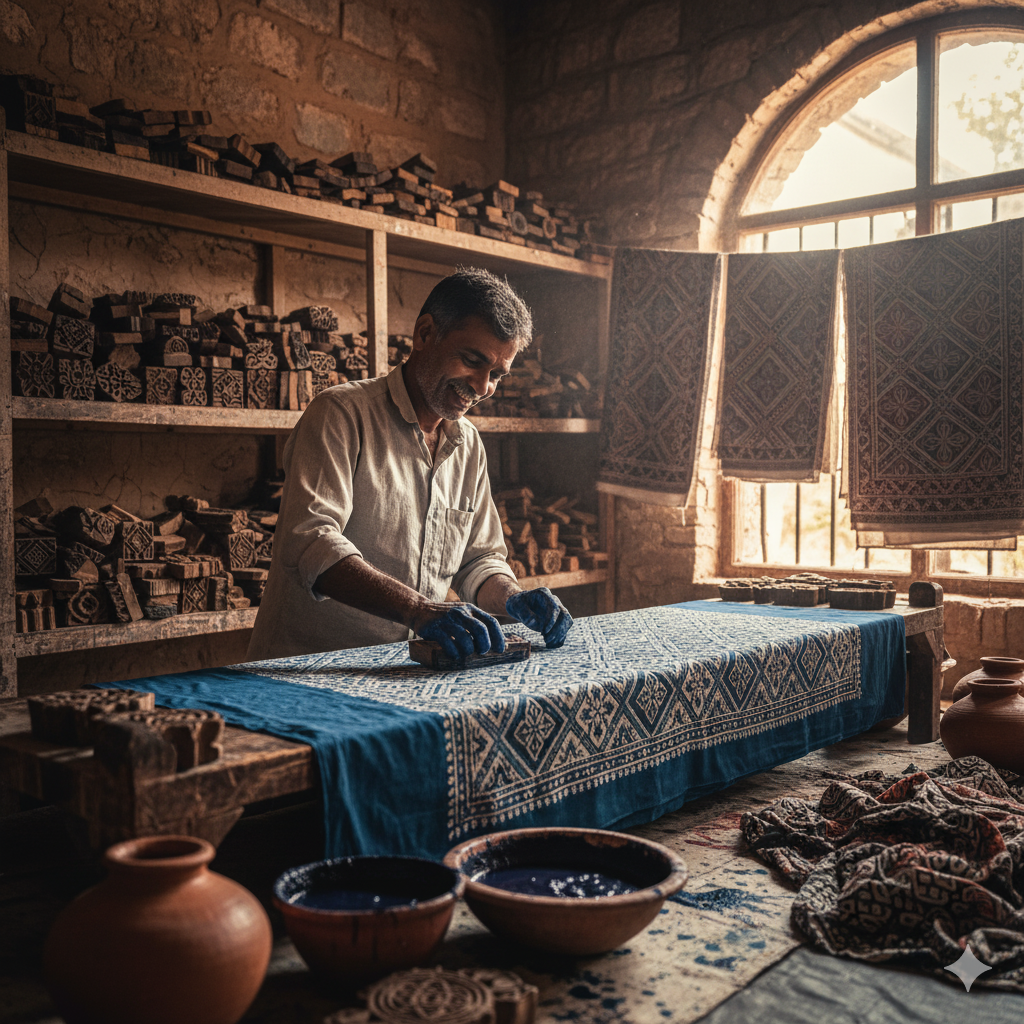
A Dance of Earth and Skill: The Making of Ajrakh: The creation of an Ajrakh textile is an elaborate and meditative dance, involving up to 14-16 distinct stages, all performed by hand.
- Scouring & Washing: The journey begins with preparing the cotton fabric, washing it repeatedly to remove impurities, often using natural elements like camel dung and local river water.
- Hardening & Printing: The fabric is then treated with a hardener, followed by the first stage of printing using resist paste, which protects areas from dye.
- Dyeing with Natural Indigos: The cloth is then dipped into vats of natural indigo, revealing the first layer of blue patterns.
- Resist Printing & Mordanting: More intricate block printing follows, using a mix of clay, gum arabic, lime, and other natural ingredients. Mordants like alum or iron rust are applied to specific areas to help subsequent dyes fix to the fabric and create different colors.
- Madder Dyeing: The fabric then enters the madder dye bath, where the areas treated with mordants absorb the rich red hue, while the resisted areas remain untouched.
- Final Wash & Sun Drying: The process culminates in a thorough washing to remove all resist paste and excess dye, followed by sun-drying, which intensifies the colors.
The result is a textile with intricate geometric and floral patterns, reversible in its beauty, and infused with the essence of natural materials.
Beyond the Fabric: Ajrakh in Modern Homes: Traditionally worn by the Maldhari cattle herders of Kutch, Ajrakh has found its way from turbans and shawls to contemporary home decor. Imagine the depth and character an Ajrakh-printed cushion cover could bring to your living room, or a subtle Ajrakh table runner adding an earthy elegance to your dining space. Each piece is not just a decorative item; it’s a conversation starter, a piece of living history, and a testament to sustainable, slow craftsmanship.
Kala’s Commitment: At Kala, we are honored to collaborate with master Ajrakh artisans who continue this magnificent tradition. By choosing an Ajrakh product from our collection, you are directly supporting these families, preserving a precious cultural heritage, and bringing a truly unique and ethically made piece of art into your life. It’s more than just decor; it’s a connection to the earth, to skilled hands, and to centuries of history.
Conclusion: Ajrakh is a beautiful reminder that true luxury lies in authenticity, in the story behind the object, and in the impact it makes. Explore our collection and discover the magic of Ajrakh – a timeless tale, woven in fabric, waiting to adorn your home.
Leave a Reply